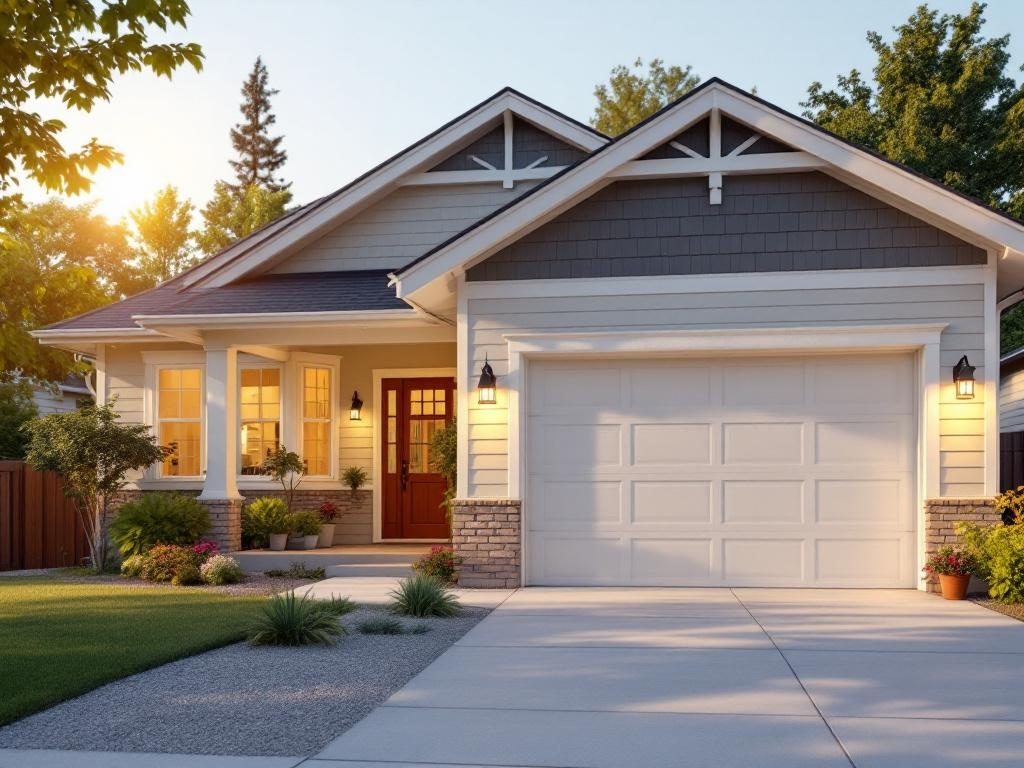
A cleaner framework for deciding which exterior projects need attention first, what adds the most value, and when a garage door upgrade deserves priority over the rest of the facade.
- How to assess the full exterior before spending
- Which upgrades deserve first priority
- Where curb appeal and ROI overlap best
Every homeowner reaches a point where the exterior of their property needs attention. Whether prompted by visible wear, a desire to improve curb appeal before selling, or simply a long-overdue investment in the home's structural envelope, exterior upgrade decisions carry real weight. They affect how the home looks, how efficiently it manages energy, and how well it holds up against weather and time.
The challenge is that exterior upgrades rarely feel urgent until they become urgent — a leaking roof, a garage door that won't close, siding that has buckled beyond cosmetic repair. By that point, the homeowner is making decisions under pressure rather than with deliberate planning. The homeowners who fare best are those who adopt a systematic approach to evaluating their exterior before problems force their hand.
Start with a Full Exterior Assessment
The most productive starting point is a comprehensive walk-around of the entire property exterior, ideally at different times of day when lighting reveals different details. Look at the roof from the ground and, if safely accessible, from above. Examine siding for cracks, warping, or fading. Check windows for failed seals and degraded caulking. Evaluate the driveway, front entry, and garage door as both functional components and visual elements of the facade.
Many homeowners find it helpful to photograph each area so they have a visual record to review later and share with contractors. A documented baseline also makes it easier to track changes over time — something that can be easy to overlook when you see your own home every day.
Prioritizing by Safety, Function, and Appearance
Not all exterior upgrades carry equal urgency. A useful framework is to sort projects into three categories: safety-critical, functionally necessary, and cosmetically desirable. Safety-critical issues — compromised structural elements, inoperable entry points, electrical hazards — should always be addressed first regardless of cost. Functionally necessary upgrades are those that, if deferred, will cause progressive damage or meaningfully degrade daily quality of life. Cosmetic improvements, while valuable for resale and personal enjoyment, can be scheduled and budgeted over a longer horizon.
Garage doors frequently cross from cosmetic into functional concern. A door that operates inconsistently, shows signs of spring or cable wear, or no longer seals properly against weather represents both a security issue and an energy problem. For homeowners in climates where temperature swings are significant — including many parts of the Upper Midwest and also in coastal California communities where marine air adds its own stresses — addressing a failing garage door promptly prevents cascading problems in the garage space itself.
Understanding Return on Investment
Exterior upgrade decisions benefit from a clear-eyed view of return on investment, particularly for homeowners who anticipate selling within the next several years. Industry data consistently shows that certain exterior projects recover the vast majority of their cost at resale, while others add less to appraised value than they cost to complete.
Garage door replacement has historically ranked among the top-returning exterior investments. A worn or dated door drags down the entire visual impression of a home from the curb, while a well-chosen replacement in a style that complements the architecture can transform the facade. Roofing and siding replacement also return well when the existing material has deteriorated to a point where buyers will discount their offer price.
Landscaping and hardscaping improvements tend to return somewhat less in raw dollar terms but contribute significantly to first impressions and time-on-market metrics. The interplay between a well-maintained landscape and a freshly upgraded garage door or front entry creates a whole that exceeds the sum of its parts.
Evaluating Contractors and Suppliers
Selecting the right contractor is as important as selecting the right product. For any exterior project, homeowners should obtain at least two or three quotes and evaluate each contractor on factors beyond price: years in business, references from local projects, licensing and insurance, and willingness to provide a written contract with specific scope, timeline, and warranty terms.
Local reputation matters considerably in the exterior services trades. A contractor or supplier who has served the same geographic area for a number of years depends on word-of-mouth business from satisfied customers and has genuine motivation to deliver quality work. This is particularly true for specialized work like garage door installation, where the quality of the installation determines how reliably and safely the door operates over its full service life.
Homeowners in Southern California's North County, for example, often turn to established local providers for garage door services. Finding reliable garage door services in North County from a company with deep product knowledge and a history of local installations provides peace of mind that goes beyond what a national chain typically delivers in customer service and follow-through.
Timing and Seasonal Considerations
Exterior work is influenced by weather and contractor availability in ways that interior renovations are not. In regions with cold winters, roofing, painting, and certain siding installations have preferred seasonal windows. In milder climates, the primary scheduling consideration is simply contractor availability — demand peaks in spring and fall when homeowners are most motivated to begin projects.
Planning ahead by four to six months typically allows homeowners to select their preferred contractor rather than taking whoever is available, and may provide negotiating leverage as contractors fill slower periods. It also allows time to obtain multiple quotes, research products thoroughly, and avoid the impulsive decisions that come with deadline pressure.
Financing Exterior Upgrades
Significant exterior projects can strain budgets, but several financing mechanisms make them more manageable. Home equity lines of credit and home equity loans provide access to capital at rates typically lower than personal loans or credit cards, with the added benefit that interest may be tax-deductible when used for qualifying home improvements. Some manufacturers and contractors offer financing programs directly, which can simplify the process for homeowners who prefer to bundle the product and financing decisions together.
Energy-efficient upgrades — including insulated garage doors, energy-efficient windows, and certain roofing materials — may also qualify for federal or state tax credits and rebates, which can meaningfully offset net project cost. Checking with a tax professional about available incentives before finalizing a project plan is a step that many homeowners overlook but that can produce real savings.
Maintaining What You Improve
The payoff from exterior upgrades extends over years or decades when the improved components are properly maintained. A well-maintained garage door, for instance, should provide fifteen to twenty years of reliable service when springs and cables are inspected annually, hardware is lubricated seasonally, and weather stripping is replaced as it deteriorates. A newly painted exterior will hold its finish far longer when it is cleaned periodically and touch-up painting is applied promptly when chips or cracks appear.
Establishing a simple annual maintenance checklist for each exterior component — documented and scheduled in the same way homeowners track HVAC filter replacements and smoke detector testing — transforms exterior care from a reactive chore into a manageable routine. The homeowners who do this consistently spend less on emergency repairs and enjoy longer service life from every improvement they make.